


Page 27 - the NOISE February 2015
P. 27
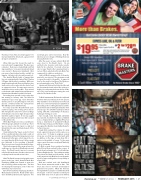
the Grateful Dead, circa 1970
ROBERT ALTMAN/MICHAEL OCHS ARCHIVES: newyorker.com
The Dead. How often does that happen? He had just landed his dream job, a gig coveted by tapers everywhere.
When Dick was first shown the vault he saw Lesh wasn’t exaggerating. The place was a disaster. Reels were stacked high and fall- ing everywhere. Some were boxed and dated, some weren’t. Many were mislabeled. Dick saw years of work ahead and he couldn’t be happier. He had a job to do and he went to it.
The Grateful Dead’s habit of taping their live sets originated with Owsley “Bear” Stanley, LSD guru and their first soundman. While run- ning the mixing board, Bear would plug a two- track reel-to-reel recorder into the stereo feed to capture the show. The tapes were never in- tended for release to the public. They existed so the band could critique their performances afterward and fix what needed to be fixed.
Recording was sporadic in the early days but starting in January 1969, The Dead at- tempted to tape every gig. Even after Bear went to prison on an LSD charge in 1970, the practice continued under his replacements Bob & Betty Cantor and Dan Healy.
For many years The Dead frowned upon audience taping. The bootleg LP era was in full swing by the early 1970s and recordings of the Dead’s sets were in high demand. Bear hated the audience tapers. If one was caught during a show, Bear would curse him out and confiscate his reels.
When Dan Healy took over as soundman in 1974 the group’s attitude loosened up. There was no way to stop the tapers so why not bring it into the open and make it a part of the
Dead’s trip?
Healy instituted the “tapers section” in front
of the soundboard where die-hards could set up aerial mikes without blocking anyone’s view. Healy would often give certain tapers the ste- reo signal directly off the board. Relix, a maga- zine dedicated to the recording of Grateful Dead concerts, was launched around this time.
Dan Healy suggested the group release the vault tapes on cassette to Deadheads via mail order. The Dead found it was not economi- cally feasible at the time. Besides, their record company feared it would cut into sales.
With The Dead’s unexpected popular resur- gence in the late 1980s, Grateful Dead Mer- chandising (GDM) was formed to stem the tide of bootleg t-shirts and posters. The idea of releasing the vault tapes, now on the new CD format, was resurrected.
By 1990 the vault was shaping up, thanks to Dick Latvala’s hard work. Nearly all the tapes were identified, labeled and organized. The
BY TONY BALLZ
word had gone out for lost shows. Now the laborious process began of finding what was missing from the reels.
After five years as tape archivist Dick felt even closer to the Dead’s music. He un- earthed some treasures and made cassette dubs for his collection. He snuck a few rare sets to taper friends after swearing them to secrecy. When asked about his job, Dick often compared it to a kid in a candy store.
Lesh told Dick to prepare a list of shows he wanted to see released. The group was ready to open the vault to the public. In apprecia- tion for the work he had done, The Dead pro- posed naming the series “Dick’s Picks.”
Latvala was flattered, both by the title and the fact that the band valued his opinion so highly. He easily named a dozen shows off the top of his head and began setting the reels aside for The Dead to listen.
To Dick’s amazement, Phil was the only band member with any enthusiasm for the project. They wanted to move forward, not look back. Dick once cornered Jerry Garcia to play him an especially good recording, but Garcia said he wasn’t interested in reliving his mistakes from 20 years ago. He called the vault tapes embar- rassing. Dick felt a small twinge of despair, a harbinger of things to come.
Sure enough, every show Dick submitted was rejected, mostly for tiny flaws: a flubbed note, a misplaced lyric, a slightly off-key har- mony, a small burst of unwanted feedback. The few tapes that passed the Dead’s scrutiny were given the thumbs down by Dan Healy for technical reasons.
Slowly Dick realized his criteria for what made a great show were not the same as ev- eryone else’s. To Healy, an engineer, a great show was one that was recorded well, with no glitches on the tape or level drop offs or splices in the middle of songs. To the musi- cians, a great show was one played flawlessly with no screw-ups.
To Dick, a great show contained an intan- gible X-factor that reached for the cosmos. A great show had magic in it. To hell with two or three flubbed notes. They add personality. They show The Dead are but mortals. As far as the technical side, Dick had come from the world of tape trading where lousy fidelity is a fact of life.
Dick was crushed and a bit bewildered. These shows meant the world to him. This music was close to his heart and deeply in- grained in his psyche. What the hell was wrong with these people? Couldn’t they hear the magic? A show could be recorded pris- tinely with every note in place but without
>> CONTINUED ON PAGE 32 >>
thenoise.us • the NOISE arts & news •
FEBRUARY 2015 • 27


